


Mesh from Implicit Body
Mesh from Implicit Body
Tolerance: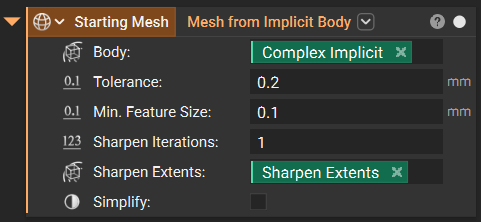
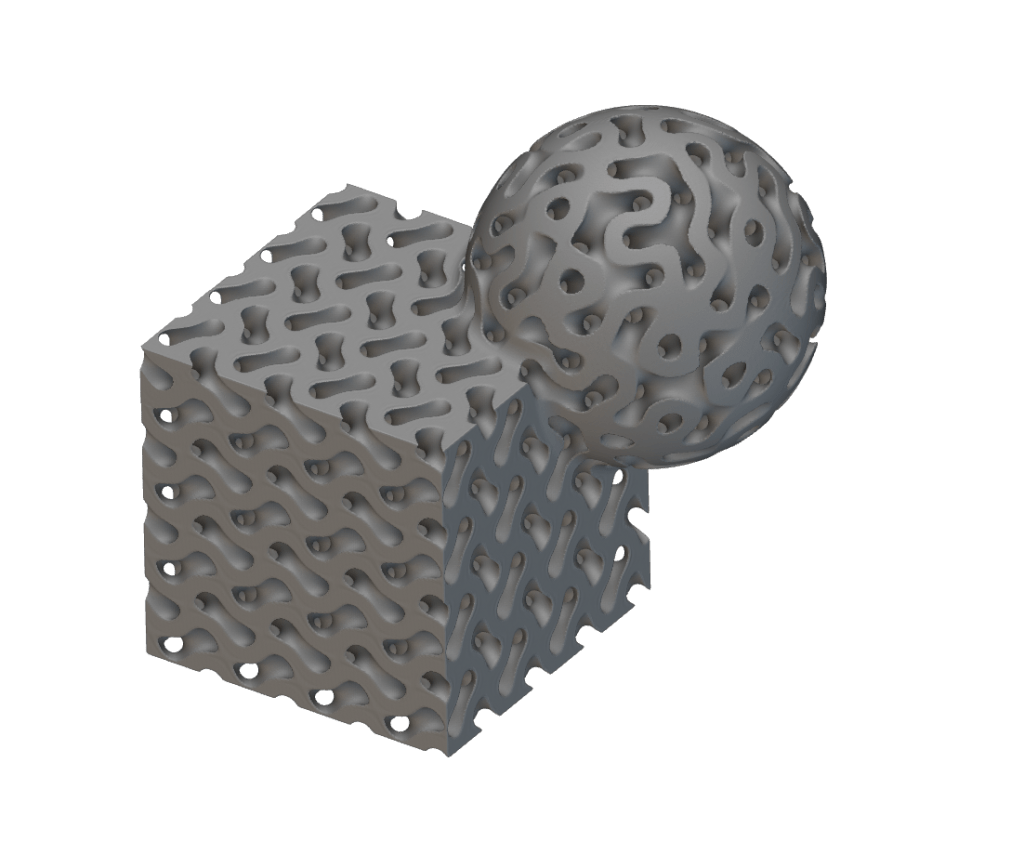
- “Step Down Method” – Start with a large tolerance and then continue to lower
- Starting Size: 30-50% of your minimum feature size
- “Step Down Method”
- Use this input if the output mesh captures small details which are not manufacturable.
- (In the Overload Option) nTop gives you the option to sharpen only specific regions using the Sharpen Extents to avoid sharpening the whole mesh.
- If you’re not satisfied with the output, first try increasing the number of iterations and then lower the tolerance (Generally, three sharpening iterations is a recommended starting point. Increasing the number of sharpen iterations can help to reduce down steam issues when remeshing.
Simplify Mesh by Amount
Simplify Mesh by Amount
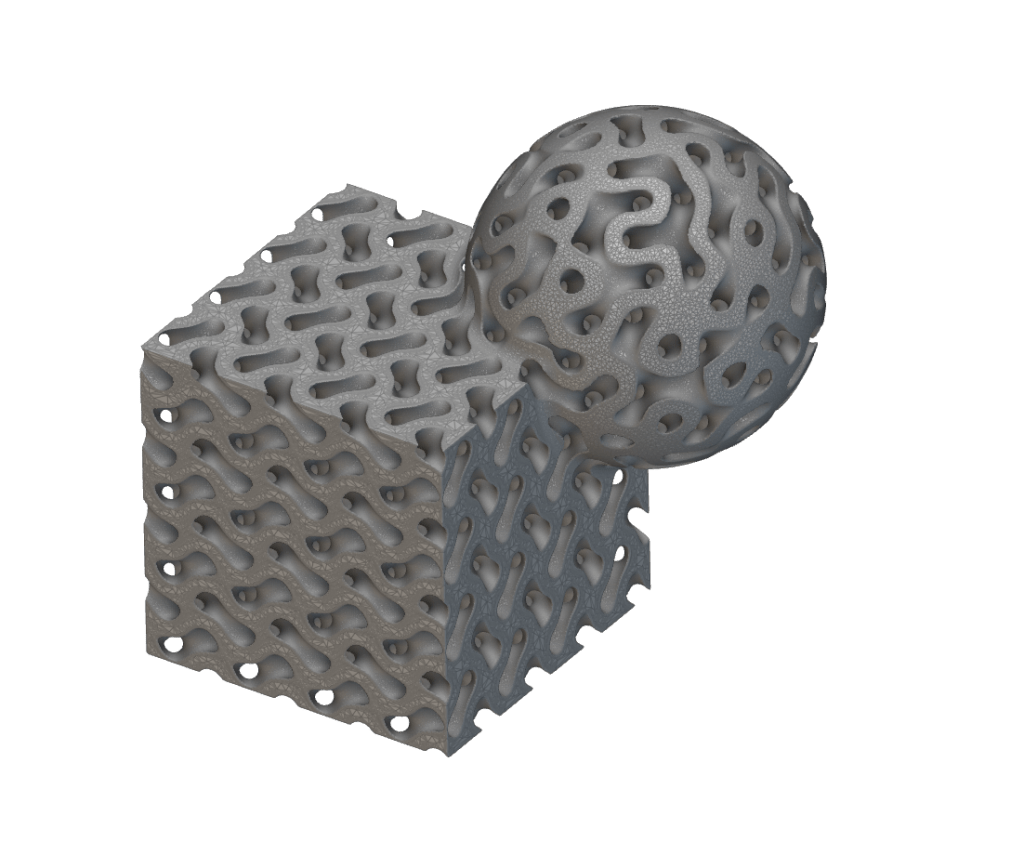
Start with 50% and check quality (i.e. self-intersection, fidelity, etc.)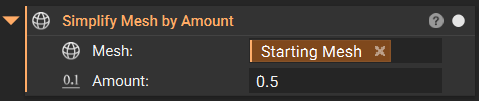
Simplify Mesh by Threshold
Simplify Mesh by Threshold
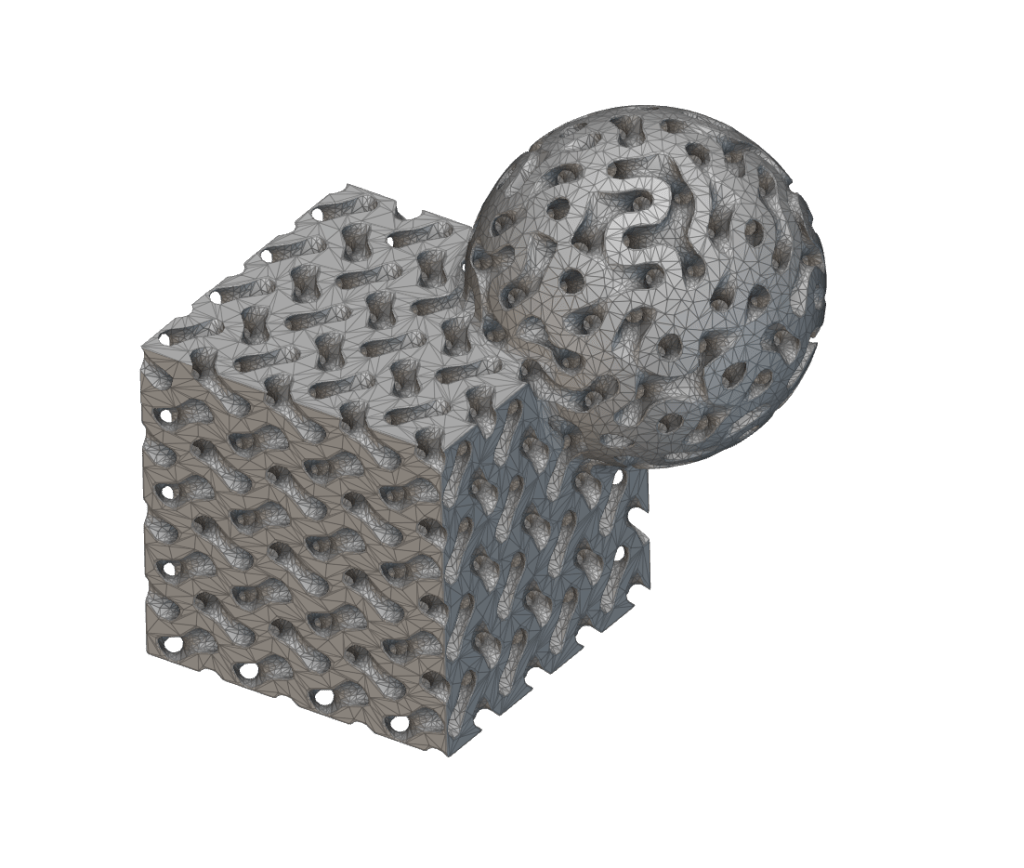
Start with 10% of the input mesh tolerance and then decrease from there. (i.e. if your Mesh from Implicit Body tolerance is 0.2mm, your starting Simplify Threshold value is 0.02mm)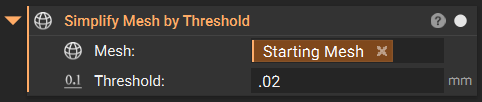
Remesh Surface
Remesh Surface
Growth Rate: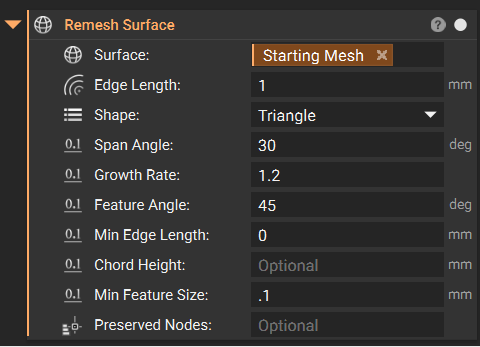
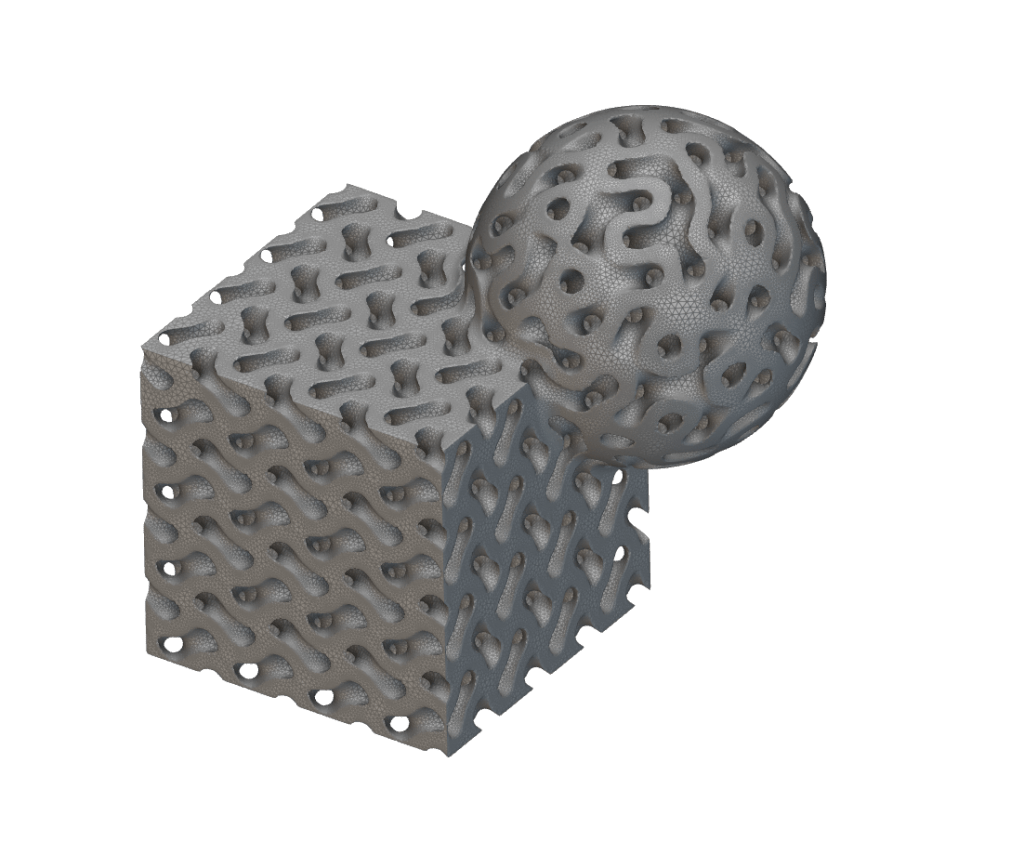
- The default is 2, but when a higher-fidelity mesh is required, use a growth rate between 1.2 and 1.5.
- Edge length is not the only or always the best way to control your mesh. For example, the Span Angle and Chord Height can be great ways to preserve your geometry.
Export Mesh
Export Mesh
If your downstream application will accept a 3MF file, these are generally 1/3 the size of an equivalent STL file.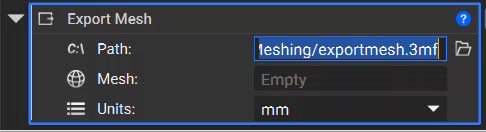
Note: We have recently added the Mesh Quality block to compute mesh quality metrics relevant for simulation analysis. This block is useful if the given volume mesh or (surface) mesh is used to create a downstream FE mesh. Available metrics include orthogonality, skewness, composite mesh quality, and intersecting triangles. The HUD also features a mix and max slider to view elements within the selected range to easily identify specific elements that may cause issues solving the simulation and getting accurate results.