

Thermal Analysis
In the Isotropic / Orthotropic Thermal Property blocks, we specify values of Conductivity (W/(m⋅K)) and Specific Heat (J/(kg⋅K)).

Thermal Stress Analysis
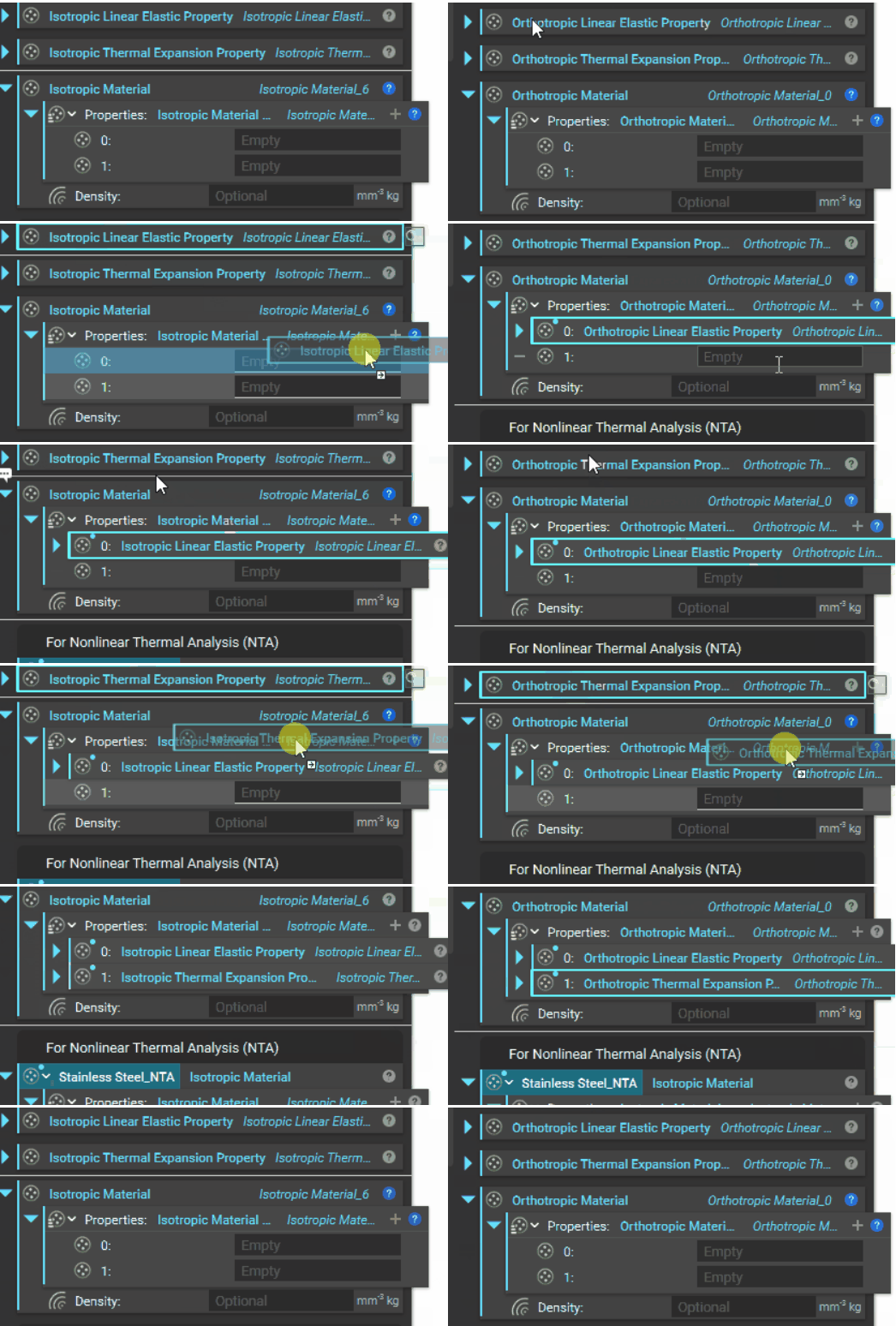
As mentioned before, a thermal stress analysis is essentially a static stress analysis which considers the expansion / contraction effects of a thermal load (thermal fields) from a thermal analysis. To run a thermal stress analysis, we must define an additional property (i.e. an Isotropic / Orthotropic Thermal Expansion Property) with a value of coefficient of thermal expansion (CTE) (K-1) specified, apart from the usual Isotropic / Orthotropic Linear Elastic Property in the Isotropic / Orthotropic Material block as shown below.
Transient Thermal Analysis [Beta]
We define material properties for a Transient Thermal Analysis the same way as we do a Thermal Analysis, with the addition of the material’s Density.
Nonlinear Thermal Analysis [Beta]
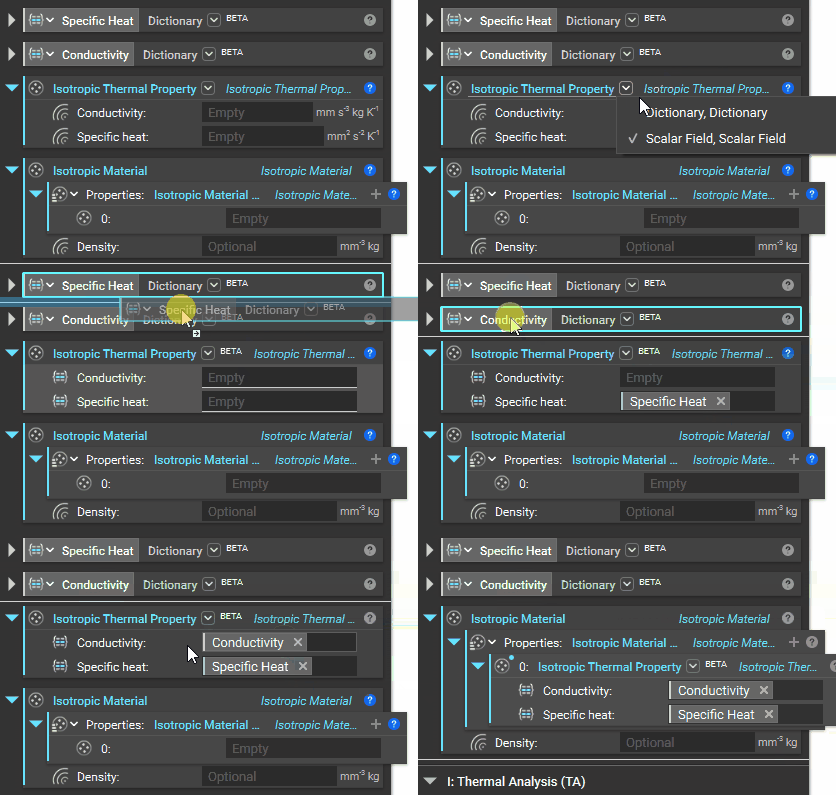
For a Nonlinear Thermal Analysis, we specify temperature-dependent thermal conductivity and temperature-dependent specific conductivity in Dictionary blocks as shown below.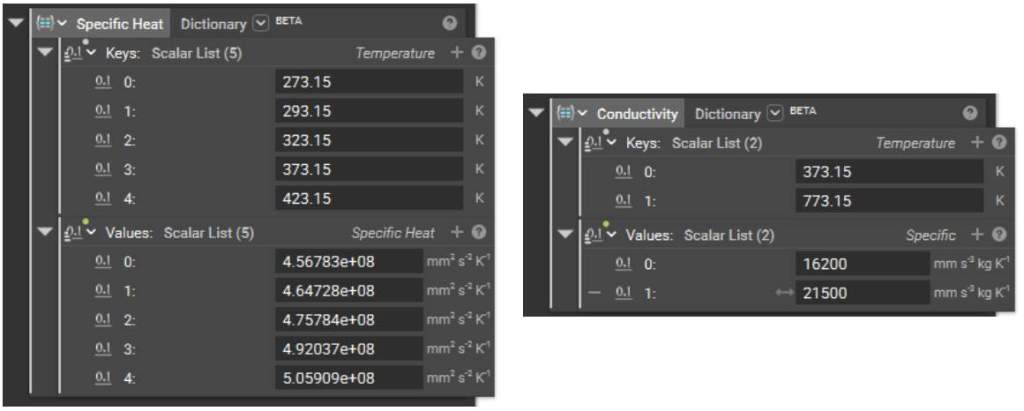
Note: The option to input Dictionaries must be activated by using the block overload of the Isotropic/ Orthotropic Thermal Property blocks.
Material Library
In nTop, there are certain Sample Materials available in the Design Analysis tab in the ribbon. It should be noted that these materials do not have a defined thermal expansion (CTE) property, and must therefore be explicitly defined by the user before performing a thermal stress analysis.