

1. Why do we measure the TPMS wall thickness?
2. How do we measure the TPMS wall thickness?
3. How do we post-process these thickness values?
1. Why do we measure the TPMS wall thickness?
We need to ensure that the wall thickness is above the minimum printable threshold and that the thickness is uniform. Uniform walls help mitigate weak points, stress concentrations, and the risk of deformation or failure under applied loads. The TPMS can maintain its structural integrity and perform as intended by ensuring the appropriate thickness.2. How do we measure the TPMS wall thickness?
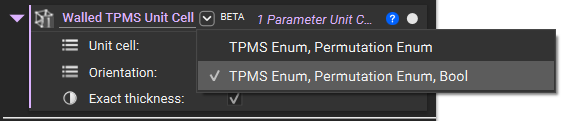
In this support article, we will take a Heat Exchanger and measure the wall thickness of the lattice structure in it. The Heat Exchanger is taken from the learning center course (https://learn.ntop.com/path/heat-exchangers).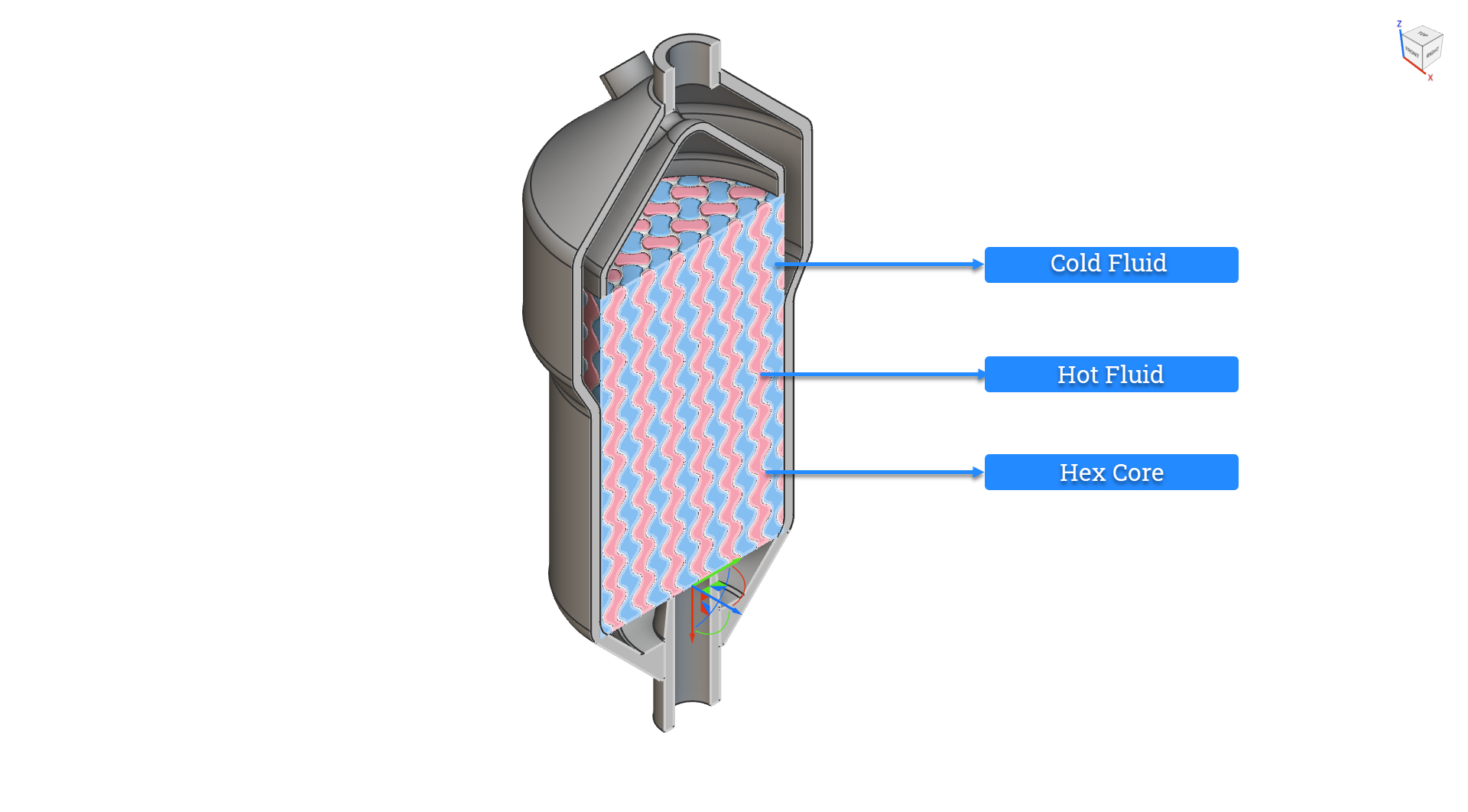 Before we start, verify that your Walled TPMS Unit Cell or Walled TPMS Unit Cell with Offest block is on the second overload with the Exact thickness input and that the input is checked.
Note: Lattices will generate much faster when the Exact thickness is unchecked. Use this setting when fast iterations are needed or for scenarios where you do not require exact wall thickness. At later stages in the process, once you have finalized the design, check the Exact thickness. This will refine the lattice’s wall thickness to match your input value.
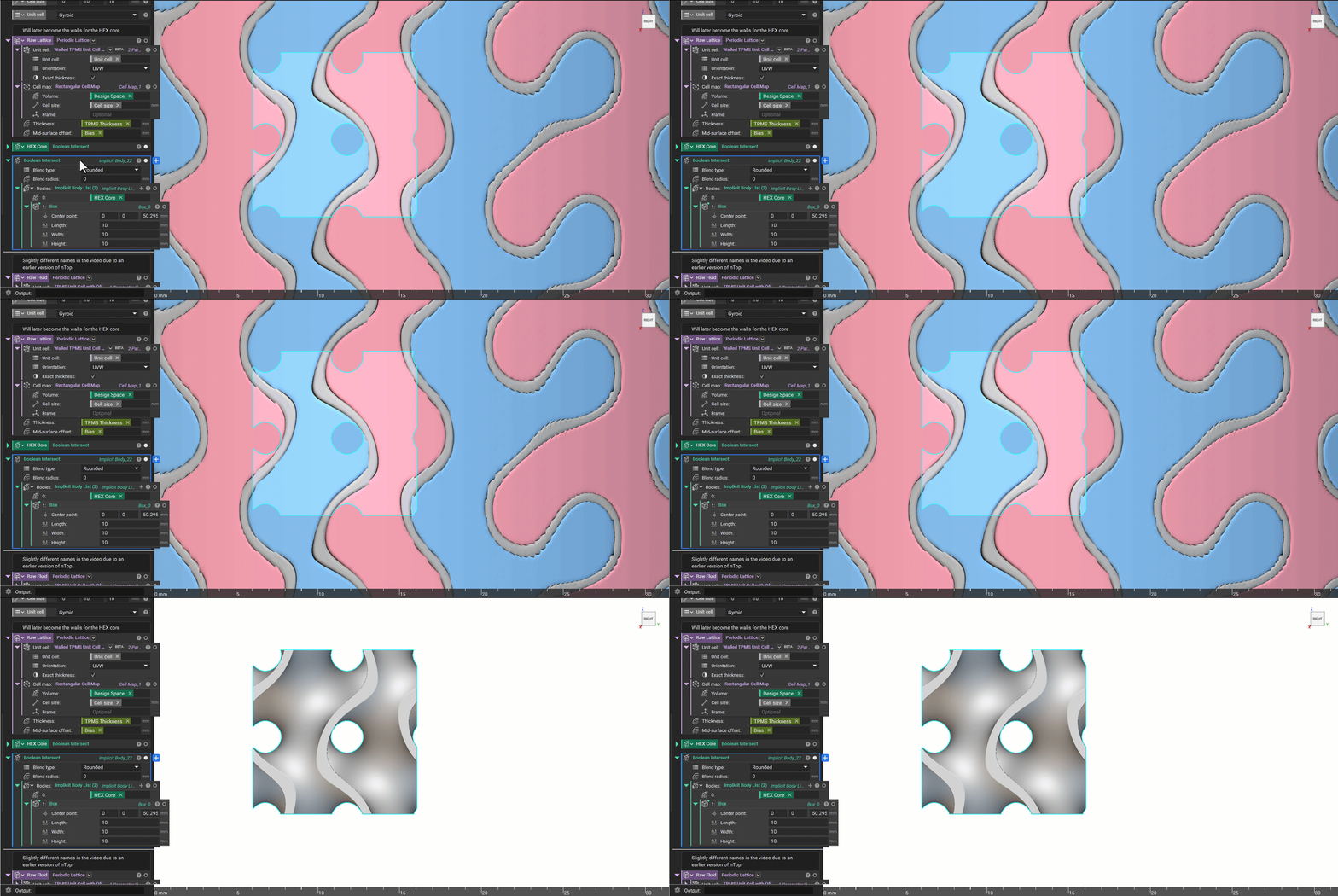
- First, define a sample area where you want to measure the thickness. The small sample size reduces the time required to get a result. You can repeat this process over multiple different samples to validate your part. We will use Box and Boolean Intersect to get the sample lattice structure from which to measure the thickness.
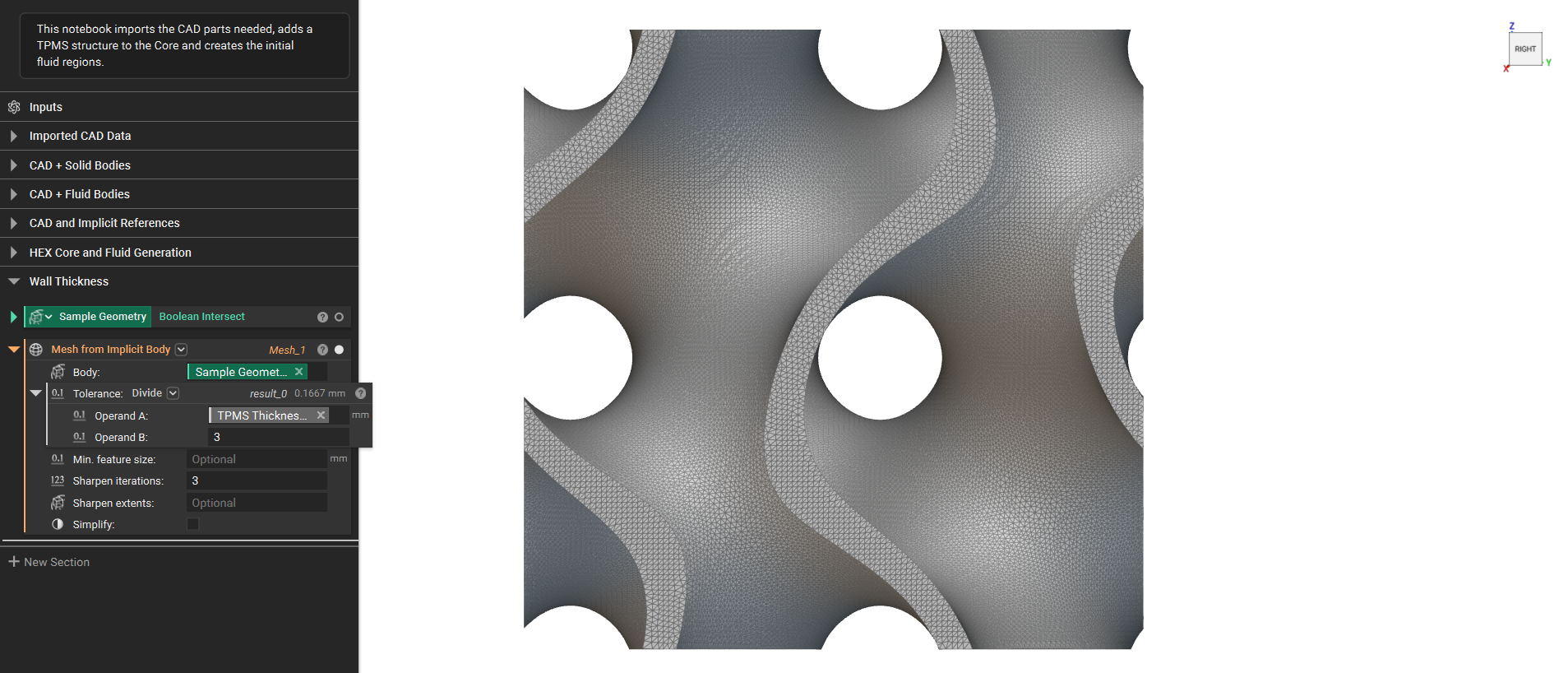
- We need to mesh the generated sample of the lattice using the Mesh from Implicit Body block.
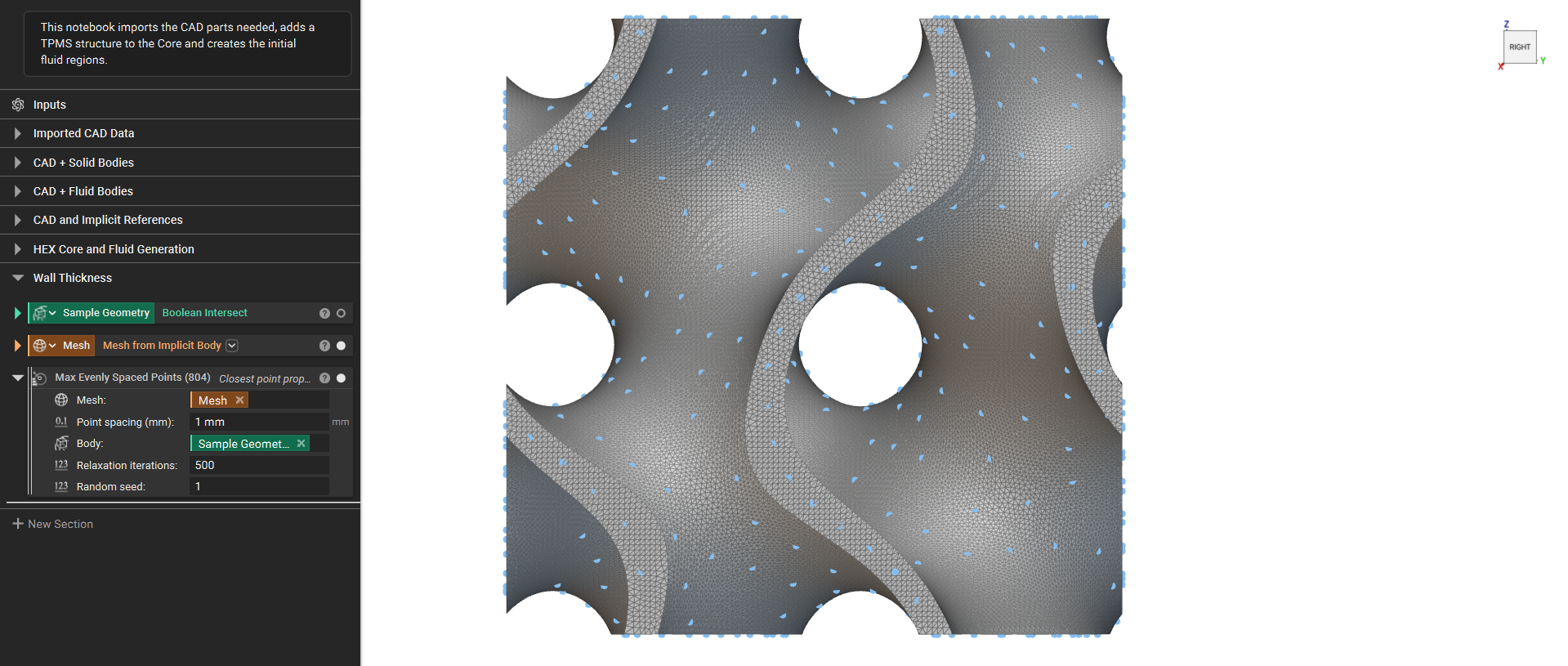
- In this step, we will generate points on the Mesh to measure the thickness values. We can use the Nodes directly or the CB - Max Evenly Spaced Points to generate evenly spaced points on the mesh. Enter the appropriate parameters for the inputs in the custom block. You can download the CB - Max Evenly Spaced Points from here and learn more from here.
- To measure the thickness, we will use the Field from Mesh Thickness block to get the values and combine the Evaluate Field and Point Map block to plot the mesh thickness at those points.
Note: Spheres and other objects with degenerate medial axes are not supported.
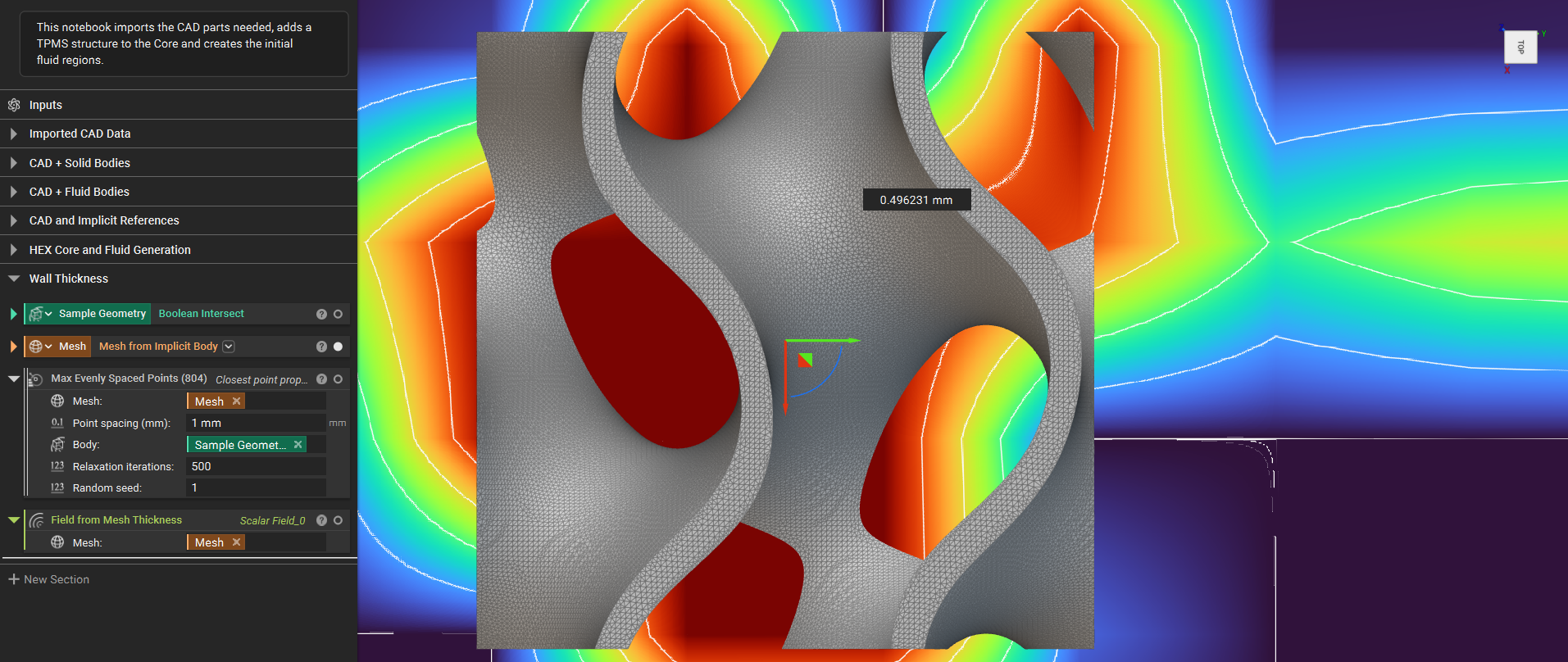 The Evaluate Field block evaluates the field at a specified point (or multiple points) and returns the value as a property within the block. The Point Map block assigns values, in scalar, vector, or temperature formats, to locations in space defined by a Point list. The block takes in a Point list and a Value list. The first point in the Point list is assigned the first value from the Value list. This pattern repeats for all remaining points and values.
Note: We recommend offsetting the sample box with a negative offset to skip the outliers measured at the boundaries.
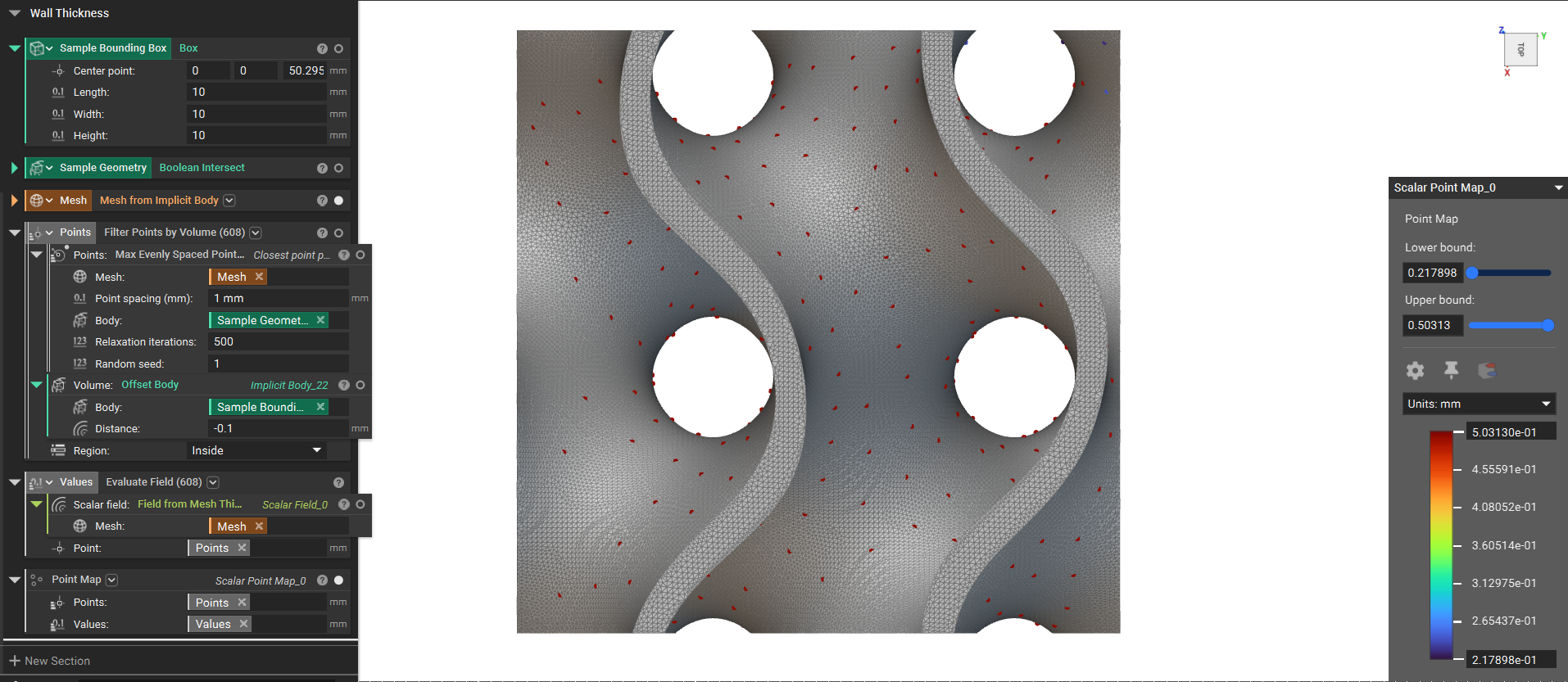 You can now visualize the Mesh thickness values as a Point Map, and we can see that it is uniform and within an acceptable range from our input of 0.5mm.
3. How do we post-process these thickness values?
You can leverage a couple of Custom Blocks to understand your results easily. The Percentiles block displays the values as a percentile. Use the Average and STDEV blocks to measure the average and standard deviation values. CB - STDEV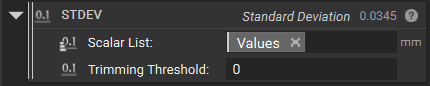 Average
 CB - Percentiles
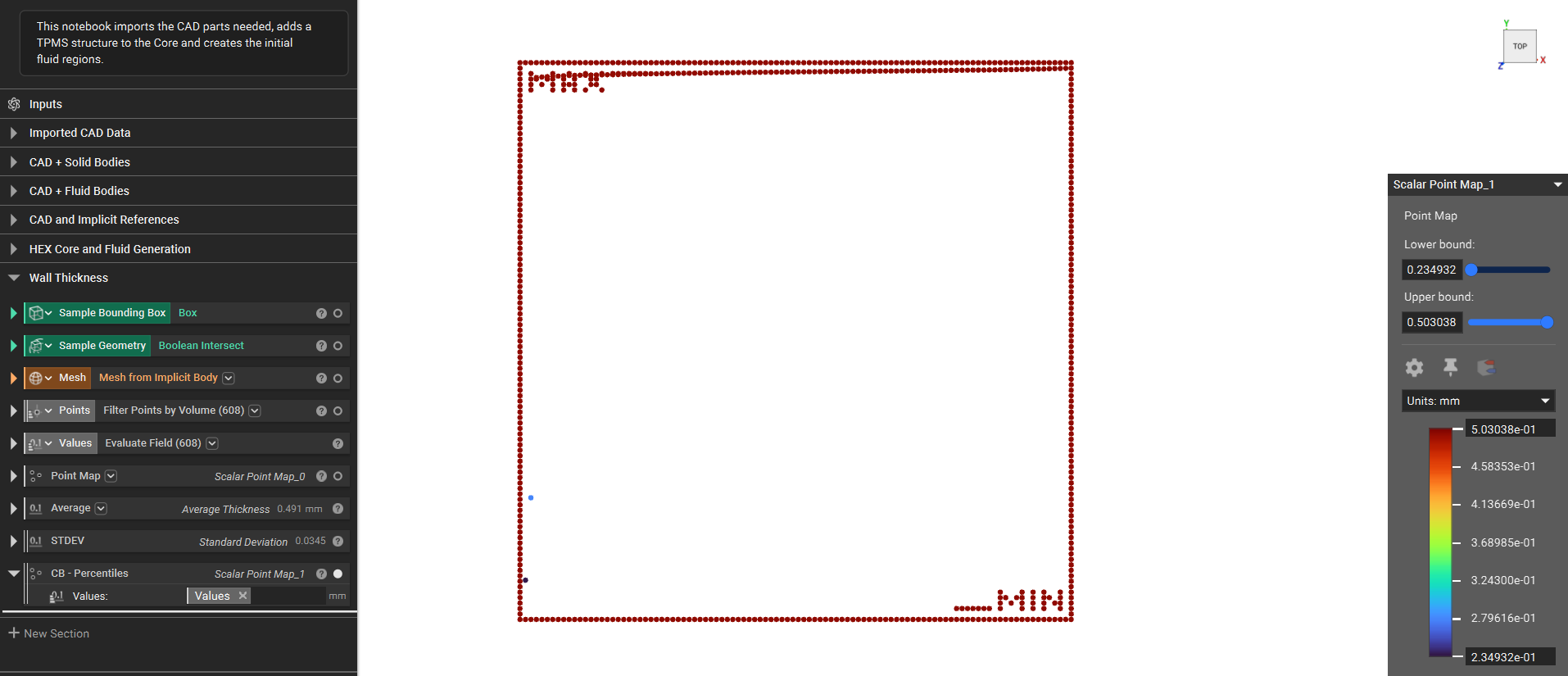 You have successfully measured the TPMS wall thickness. You can now directly slice your Implcit Body (How to create and export slices) and send it to the printer.