

Issue:
Shelling a Boolean Union inward doesn’t create the result I expect. It adds a wall or a gap between the bodies.Applies to:
- Shell
- Implicit modeling
Cause:
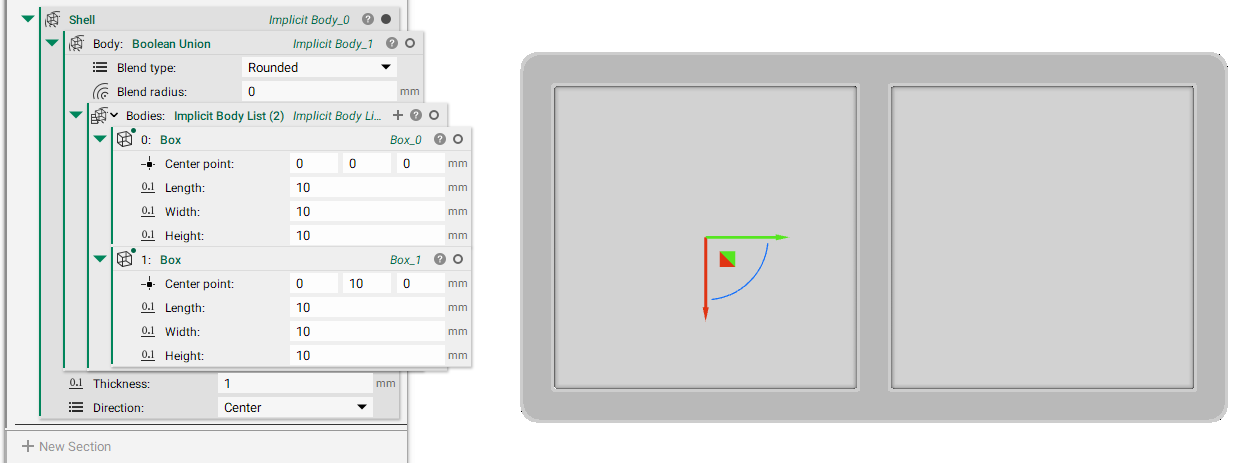
A wall or a gap can appear between the two implicit bodies due to the fields of the bodies. When the two shapes are Boolean Unioned together, it adds their fields together. Therefore, when the Implicit Bodies are shelled inward, it follows the contour of the field, creating either a wall or a gap depending on the fields of the original bodies. If we use the Shell block on this Boolean Union of two boxes, the result lines up with the shape of the contours, depending on what Direction we choose Outward, Inward, and Center. Therefore, if we shell it inward, it adds a wall between the two objects.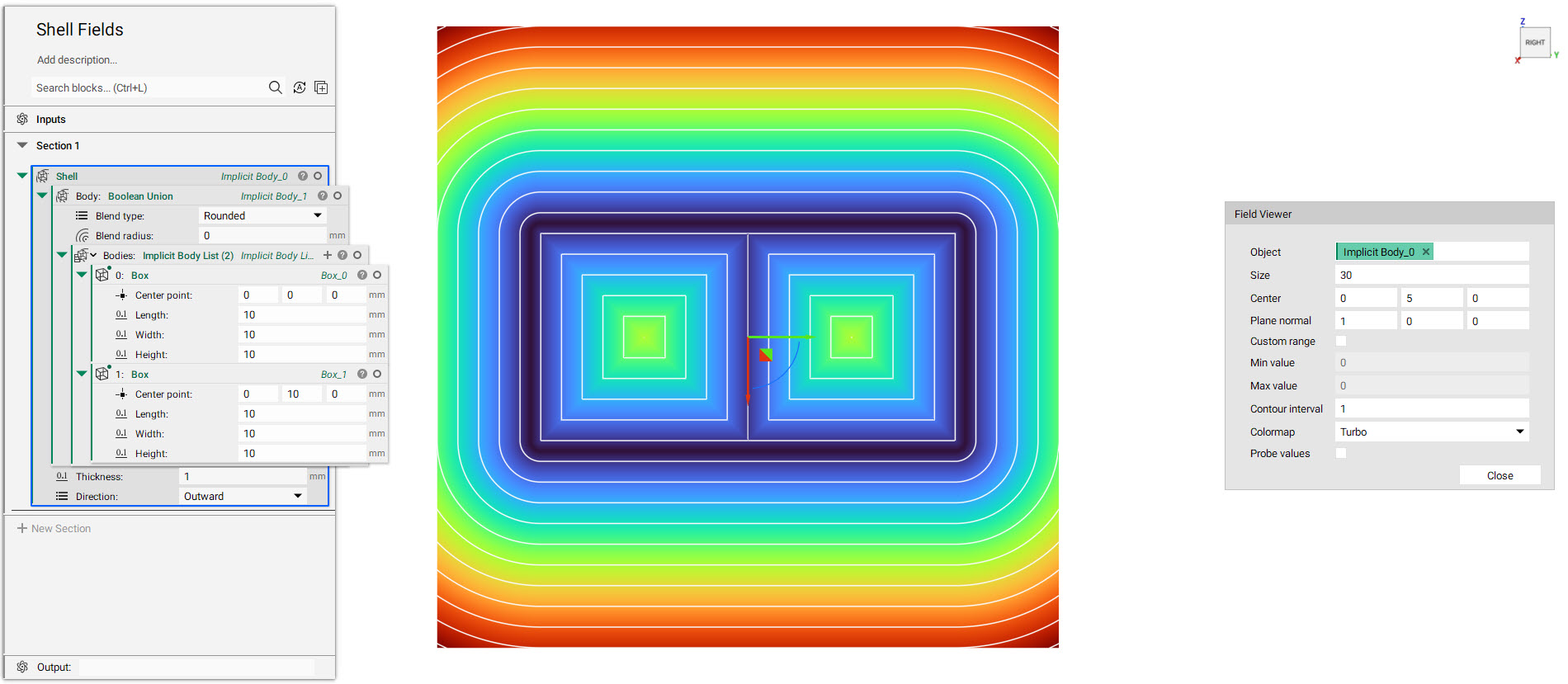
Solution:
To shell inward without a wall or a gap, you need to make sure the boolean union objects are overlapping slightly, then you convert the Boolean Union into a mesh and then back into an implicit. When you do this, it won’t have a wall or gap between the two shapes because it won’t recognize the individual fields of the shapes from before they were unioned together.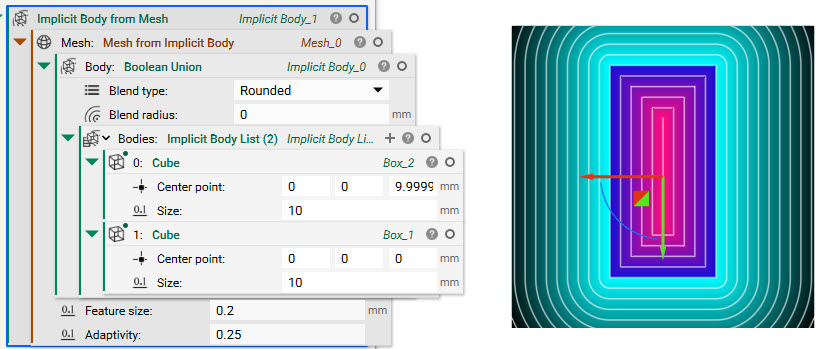 If you want to learn more about implicit vs boundary representations, check out this blog.