

Objective:
Learn some tips on how to use Math blocks to create equations.Procedure:
Nesting
Each Math block computes an expression and can be nested together with other math blocks to create larger equations. The equation (X+2)*Y=0 is shown below.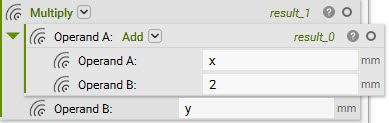
Overloads
The math blocks can compute different types of data by using Overloads to change the type. Some blocks have more options than others. The Overloads can change automatically depending on what input is given. An example of available Overloads for the Add block is shown below: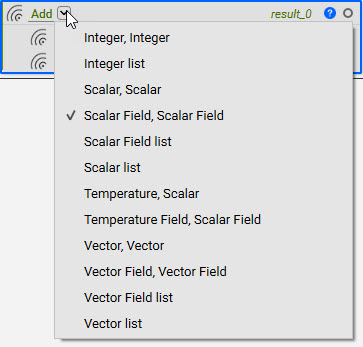
Results
Once you’ve entered the inputs for a math block, the result is shown in the upper right corner (depending on the overload type). You can see more results in the Property panel as well.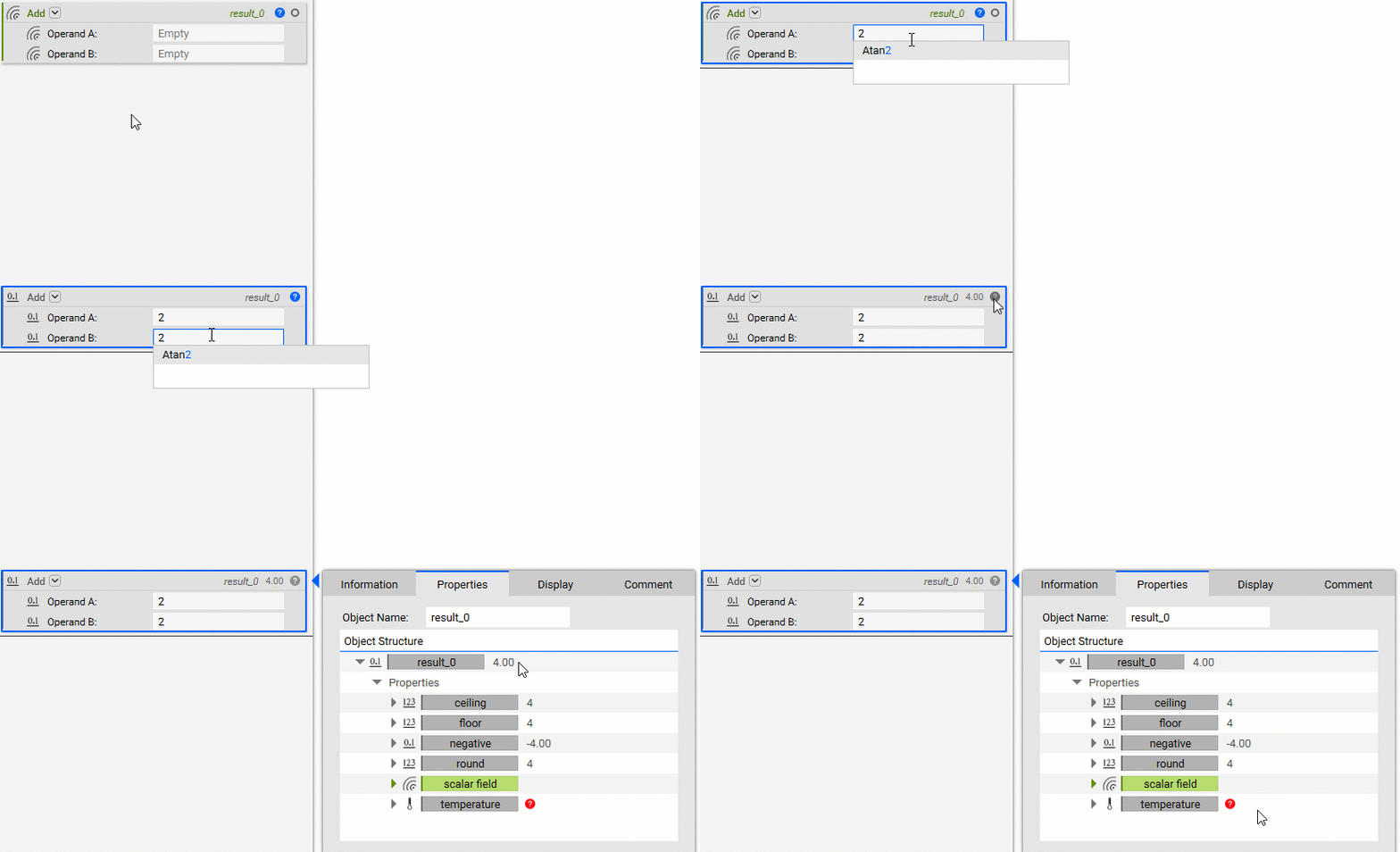
Units
One thing to look out for when creating equations is units. Sometimes you need to cancel units out by dividing by 1 of the same unit. If you encounter an error for an ‘Incompatible units in input…’, there is a chance you’ve forgotten to add units. In the example below, adding ‘mm’ to Operand B clears the error.
Variables
X, Y, and Z can be written in most math blocks directly but sometimes units don’t allow them to be. If this occurs you can write in X/ 1mm or use an Axis block as your variable. You can check out the Axis method in the article: How to create a quadratic ramp. Below is an example of sin(x). The Axis needs to be divided by 1 mm to get rid of the units.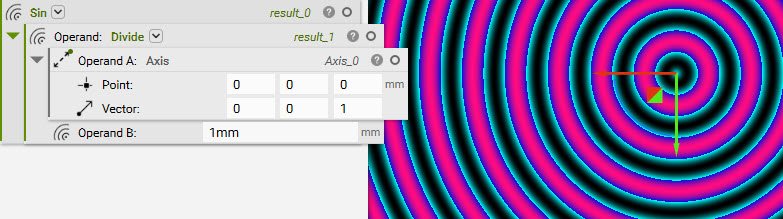 Here is an example of cos(x), using the method where we divide by mm.
