

Objective:
Learn how to use ramps and implicit bodies to define a field of engineering data that can be used as inputs into a simulation analysis.Procedure:
Constant Field:
Traditionally, material properties are defined with constant values. nTop defines scalar engineering values as Scalar Fields. In the figure below, you can see that the Thermal Conductivity is set at 152 W/(m*K) and results in a field that does not change.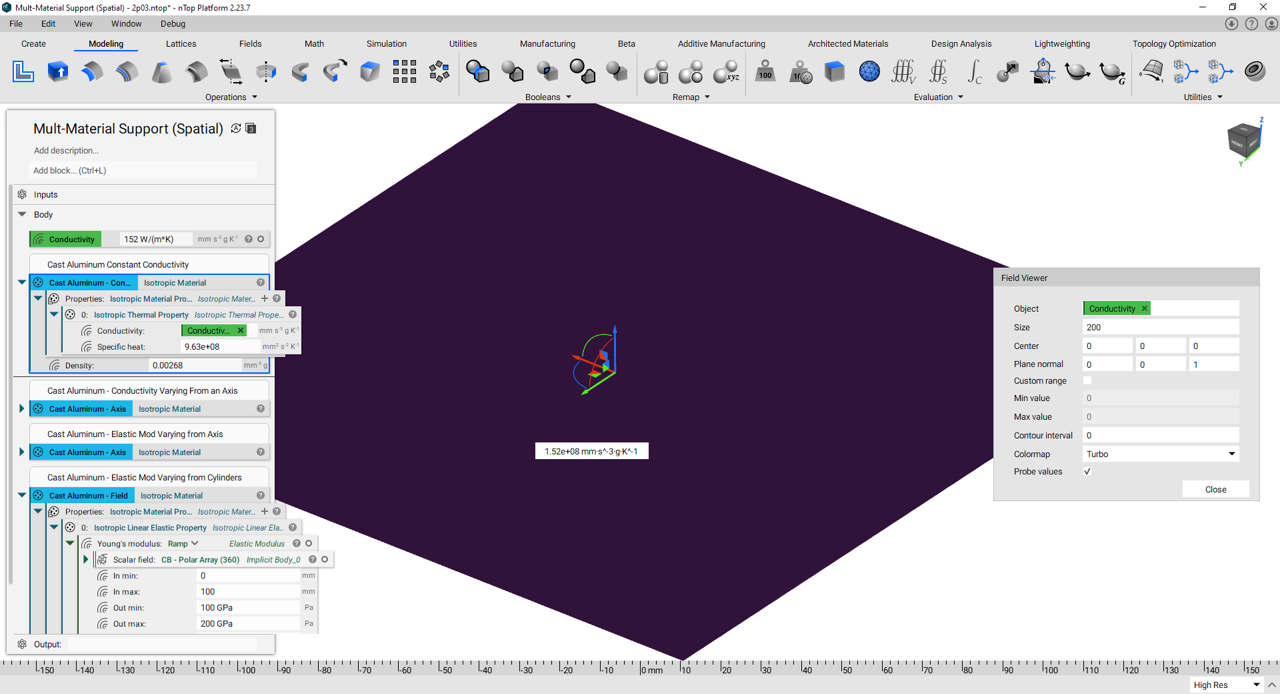
Transforming Distance Fields to Engineering Scalar Fields using the Ramp Block:
The Ramp Block allows you to use an input field to spatially transform field data into engineering units. This functionality bridges the divide between field and engineering data and allows complex analysis.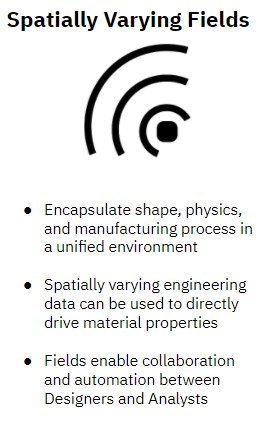 |
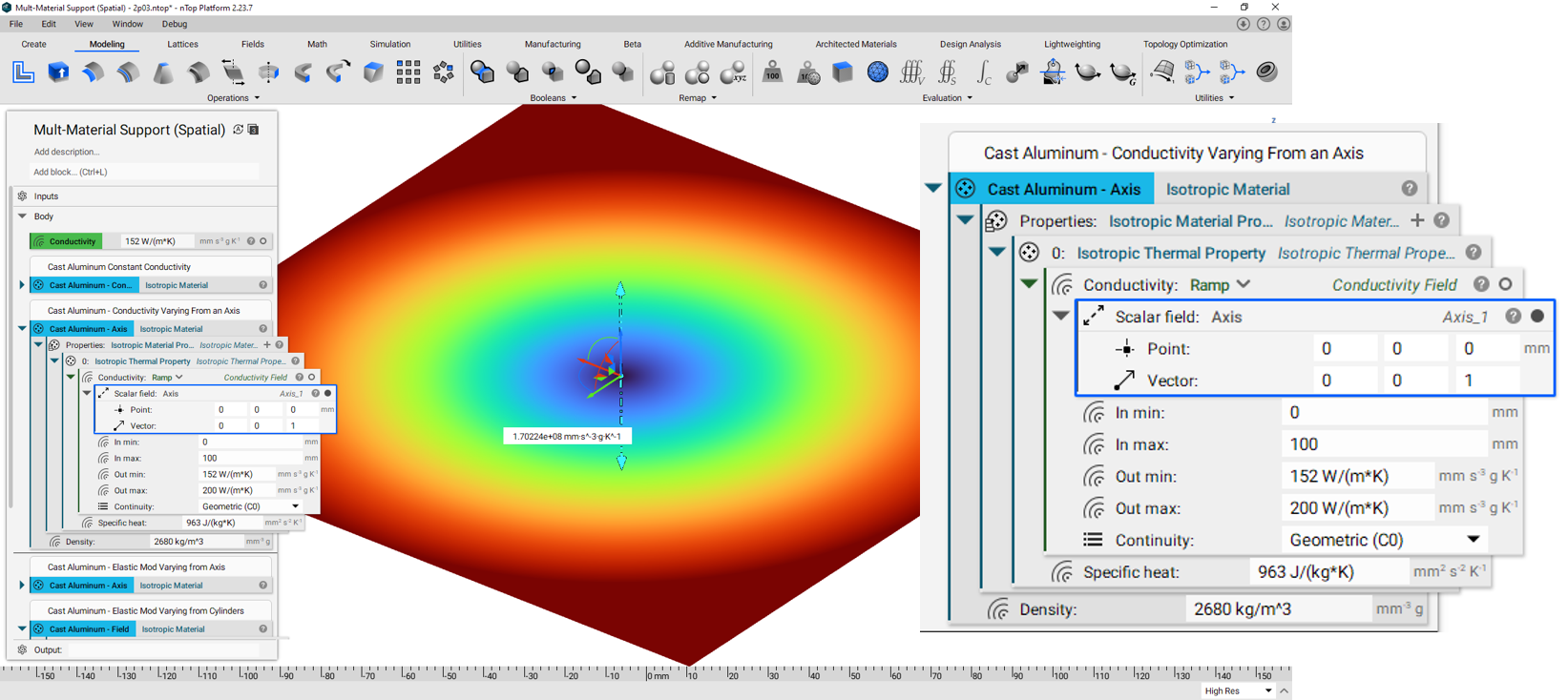
Varying Field using Multiple Objects:
Similarly, you can use multiple implicit bodies with the ramp block to produce more complex field patterns. In this case, an array of cylinders are used.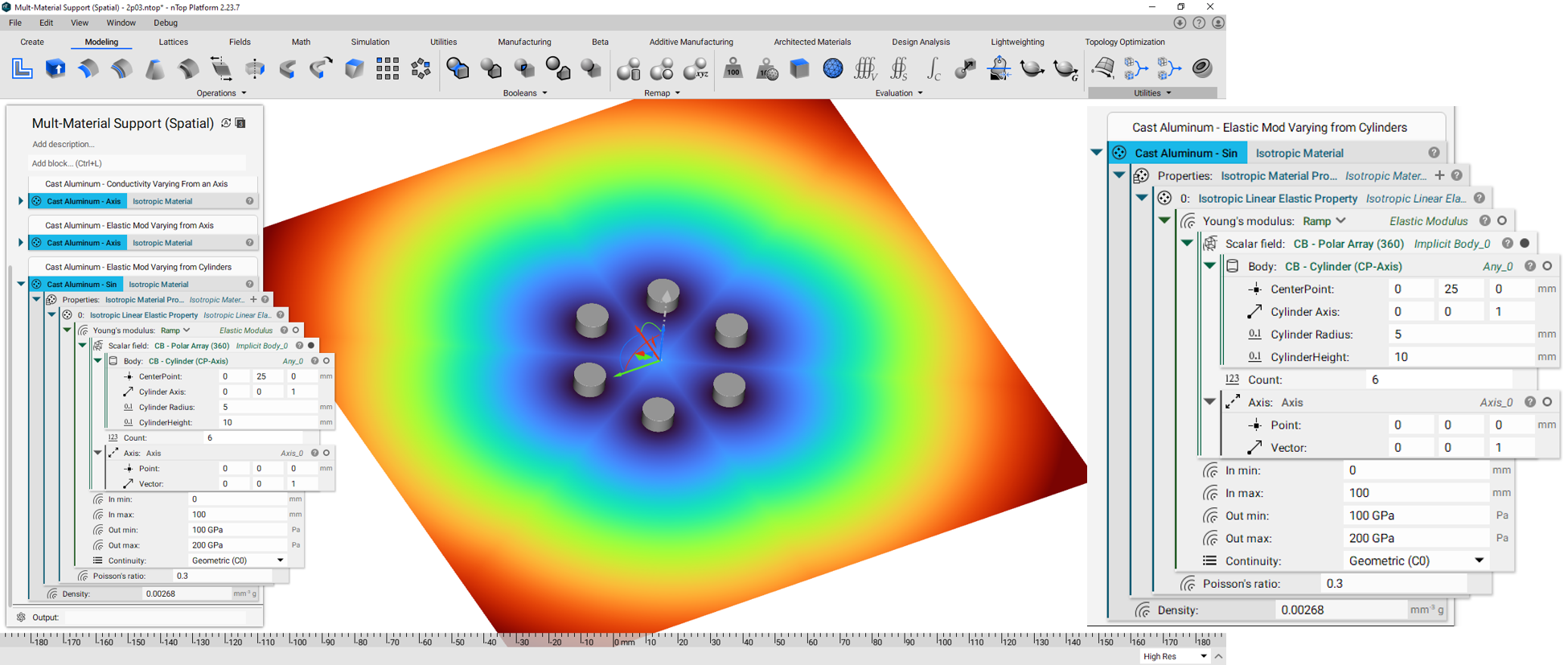
Boundary Conditions:
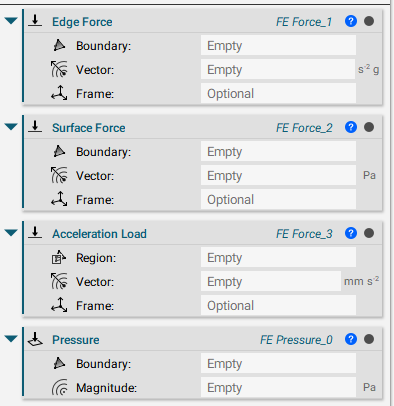
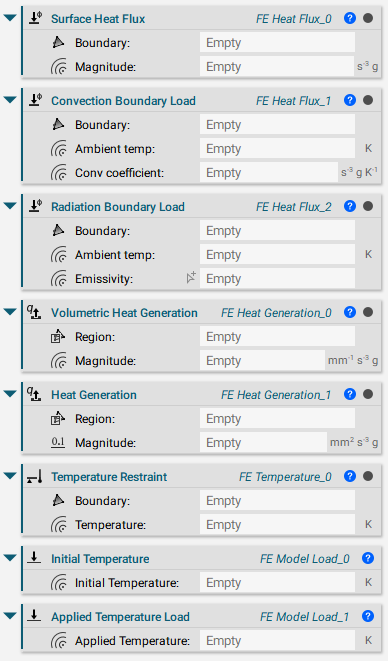
Just like material properties, certain FEA boundary conditions can vary using scalar field inputs. Examples of these types are shown below.| Structural Boundary Conditions with Field Inputs | Thermal Boundary Conditions with Field Inputs |
 |  |
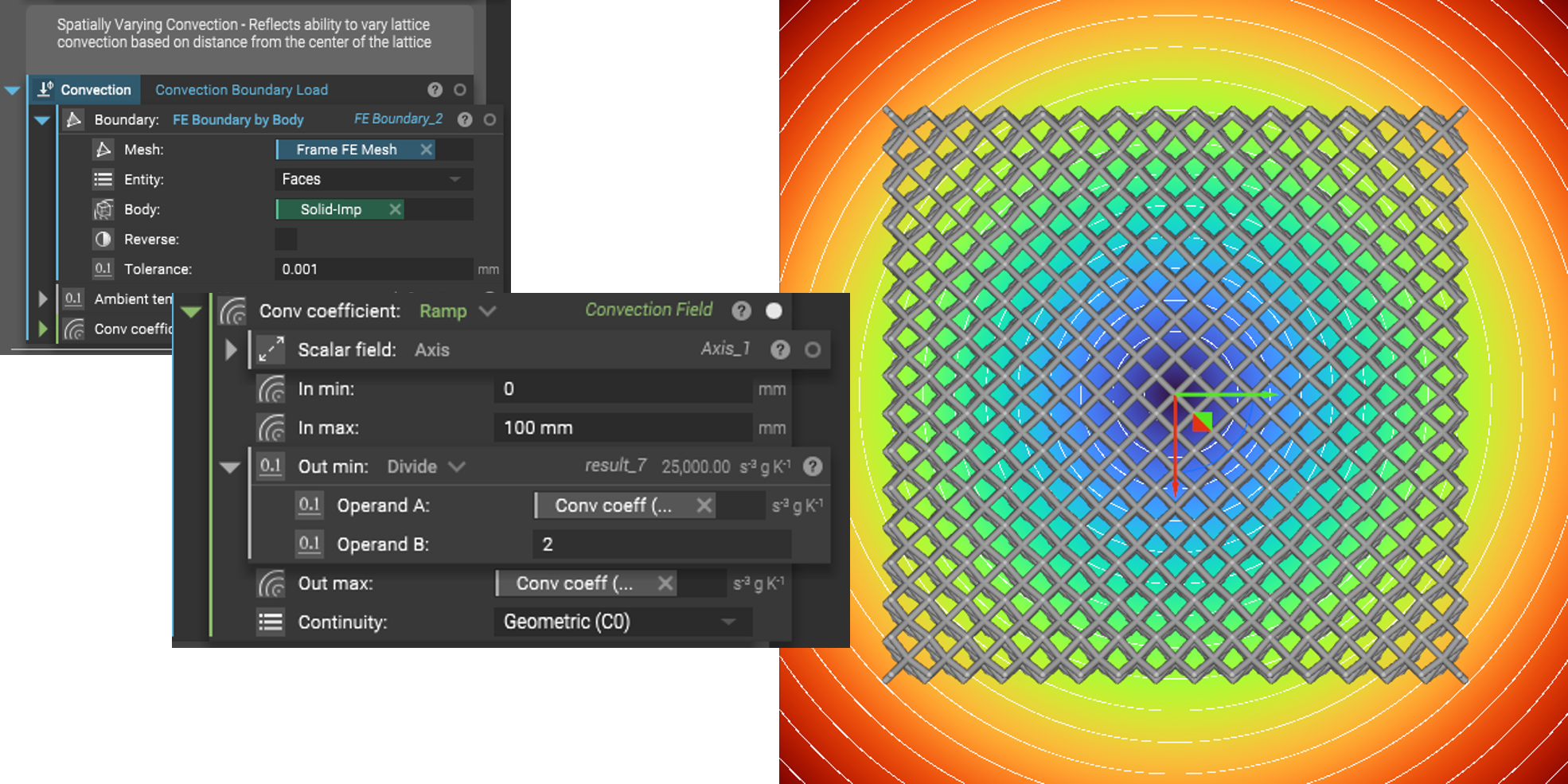 And that’s it! You’ve successfully defined varying structural and thermal material properties using fields.
Are you still having issues? Contact the support team, and we’ll be happy to help!
And that’s it! You’ve successfully defined varying structural and thermal material properties using fields.
Are you still having issues? Contact the support team, and we’ll be happy to help!